Every run invents a new one, none decided. This Next.js and Sanity kit commits six years of decisions. Your agent builds inside them, and checks its work through MCP and a real Chrome.
LynxTCA is the production foundation underneath my client work. Hundreds of choices, schema, fetching, structure, SEO, made once over six years and committed. Not a starter you outgrow in a month. Clone it, rename it, ship. The architecture is fixed; the tools are defaults you can swap. Fixed decisions are what make agentic development work: an agent inside committed conventions ships, an agent without them redesigns.
AGENTS.md and a dozen scoped skills let Claude Code or Cursor ingest the conventions before the first prompt, instead of proposing a plausible new architecture per run. Two preconfigured MCP servers ship in the repo: one reads the Next.js runtime, compilation errors, routes, docs — matching the installed version. The other drives a real Chrome for screenshots, traces, and screencasts. The agent builds inside the decisions and checks its own work.
Sections, rich text blocks, and page composition are fixed primitives — the ones six years of client work proved worth keeping. Your agent arranges them; it doesn't reinvent them.
Draft mode with Sanity Live, SEO helpers, ISR revalidation, per-entry password protect. The plumbing that always breaks in week three, already handled.
Every page serves a token-light Markdown twin to agents that send Accept: text/markdown, plus an editable /llms.txt drafted from your content. Your site speaks to machines as fluently as to people.
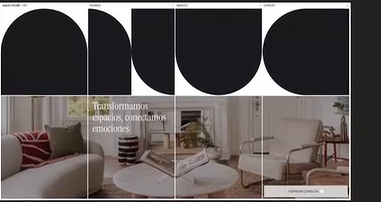
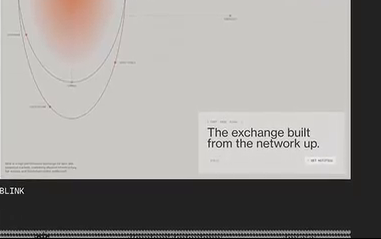
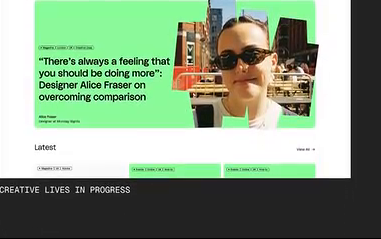
Real sites, shipped on LynxTCA. With the plumbing already handled, the effort goes where it shows. The work here has been recognized by Awwwards, FWA, and CSSDA, and picked up across design directories.


Every Sanity project I shipped, the first week looked identical: Spin up Next. Wire the Studio. Rewrite the page builder. Rebuild the SEO layer. Re-do the webhook revalidation. Re-style the same contact form for the fourth time.
By the time the actual creative work started, 3 days of the budget were gone and the client had not seen a single pixel that mattered.
Extracting it started small. One project. Then two. Then ten. Every time something broke in production, a Sanity migration that nuked a dataset, a CDN cache that served stale OG images for three weeks, a webhook that fired twice and corrupted a sitemap, the fix went back into the boilerplate.
For a long time I called this the cost of headless. I had rebuilt the same foundation so many times I could do it half-asleep, and I mistook that for being good at my job instead of what it was, doing the same work twice.
At some point that stopped being a reason to keep it to myself.
If you want the reasoning before you buy, I wrote it all down: CMS structure, content models, page composition, and content primitives. The thinking behind every decision in the codebase, free to read.
I use this on every project. I am the heaviest user. The bug I find on a Friday client engagement is the patch you get on Monday.
I am one person, not a team. That is the feature. The architecture is consistent because one mind held it from the first schema file to the last revalidation hook. Nobody overrode the opinion. Nobody added a field because a stakeholder asked nicely.
There is no distance between me and this. The decisions in the repo are the ones I make on paid work. If that sounds useful, it is yours for €549.
Edo. Frontend engineer, six years of Sanity client work, one repo that remembers all of it. The portfolio lives at edoardcollinardi.dev.